When relationships feel draining, it is often because the connection no longer matches your emotional needs or your season of life. Relationship design helps you understand who belongs where in your life, how to protect your energy with boundaries, and how to create life giving connections that support who you are becoming. This approach brings clarity, balance, and a healthier relational rhythm.

Some relationships feel like a warm blanket. Others feel like a weight on your chest. Most of us walk around holding a mix of both, trying to understand why something so natural can feel so complicated.
Relationships touch every part of life. Even when we pretend they do not. The close ones, the seasonal ones, the ones we have outgrown, and the ones we cannot quite let go of. These connections shape our energy, our clarity, our routines, and the way we feel in our own body.
Relationship Design allows you to see the truth with more compassion. Instead of letting relationships happen to you, you start noticing patterns, listening to your energy, and placing people where they actually belong in your life.
When you shift the relationship you have with yourself, a few powerful things start to happen:
- You start choosing differently.
- You listen to your own energy instead of ignoring it.
- Your standards rise quietly.
- You get more honest about what you will and will not accept.
This is the work. Gentle, daily, but life-changing over time.
What Is Relationship Design
If you look back over your life, you can probably see it. Relationships that built you up, and relationships that drained you. People you clung to even after the connection stopped feeling right. Seasons where a friendship or partnership shifted who you were becoming, for better or for worse.
That is why relationship design matters. Applying a design thinking methodology, it is not just about who you talk to or who you follow online. It is about how your connections draw on your energy, time, focus, and even your body, guided by essential design principles.
Some days you can feel it physically. The text that makes your stomach drop. The call that leaves you tired. The friend who makes you exhale a little deeper as soon as they walk into the room.
Relationship design is about paying attention to that. It is about building a life where the people around you genuinely support the person you are becoming, rather than dragging you back into old versions of yourself, through a continuous design approach to assessing your connections.
And conscious relationship design all starts in one place you might not expect.
Where Relationship Design Starts
Before we talk about partners, friends, coworkers, or family, we have to talk about you. Because every single relationship you have is filtered through the relationship you have with yourself, the core foundation of conscious relationship design.
Self Relationship Sets the Tone
Think about how you speak to yourself when you make a mistake. Or when you are tired. Or when you say “no” and feel guilty about it all day.
That inner voice is your first relationship, a primary form of communication with yourself. It shapes how you handle your needs and desires, how you show up in conflict with vulnerability, and how quickly you abandon yourself just to keep the peace. It quietly guides who you choose as a partner, what kind of friendships you tolerate, and what communities you stay in, even when you feel out of place.
It also shows up in the quieter moments, in how you handle silence. Whether you give yourself space to feel your emotions and build emotional intimacy, or you distract yourself until the feeling passes. Whether you tell the truth about what you need, even to yourself.

Start With Clarity, Not Pressure
If you want help seeing which area of your life needs support first, try the free Personal Life Evaluation Assessment (PLEA). It gently maps your 8 key life areas so you can choose one small rule that makes the biggest difference.
When we shift the relationship we have with ourselves, everything around us begins to shift too. You start noticing when something feels off. You stop over-explaining your boundaries. You stop begging to be chosen. This shift brings greater autonomy, increasing your personal power in all interactions.
Your standards rise, and not in a dramatic way. In a simple, grounded way, where your life just does not have as much room for what hurts you anymore, opening up a sense of freedom.
Why This Matters for All Connections
Every connection you have is impacted by how you treat yourself. If you ignore your own needs, you are more likely to end up in relationships where others ignore them, too. If you are harsh with yourself, criticism from others feels almost normal.
When you start to shift how you relate to yourself, a few things change in your outer world:
- You start listening to your energy instead of forcing every relationship to work.
- You set boundaries earlier, before resentment builds up.
- You choose people who feel safe with your “no” and your truth.
This is not about perfection. It is about honesty. About finally seeing what your relationships are actually costing or giving you.
The Three Types of Relationships We All Experience
To make sense of the different roles people play in our lives, it helps to have a simple picture of relationship structure. One of the clearest comes from Madea’s well-known tree analogy about people and relationships, a key element in relationship design.
If you have never heard it, there is a helpful breakdown of it in this Madea relationship analogy explanation.
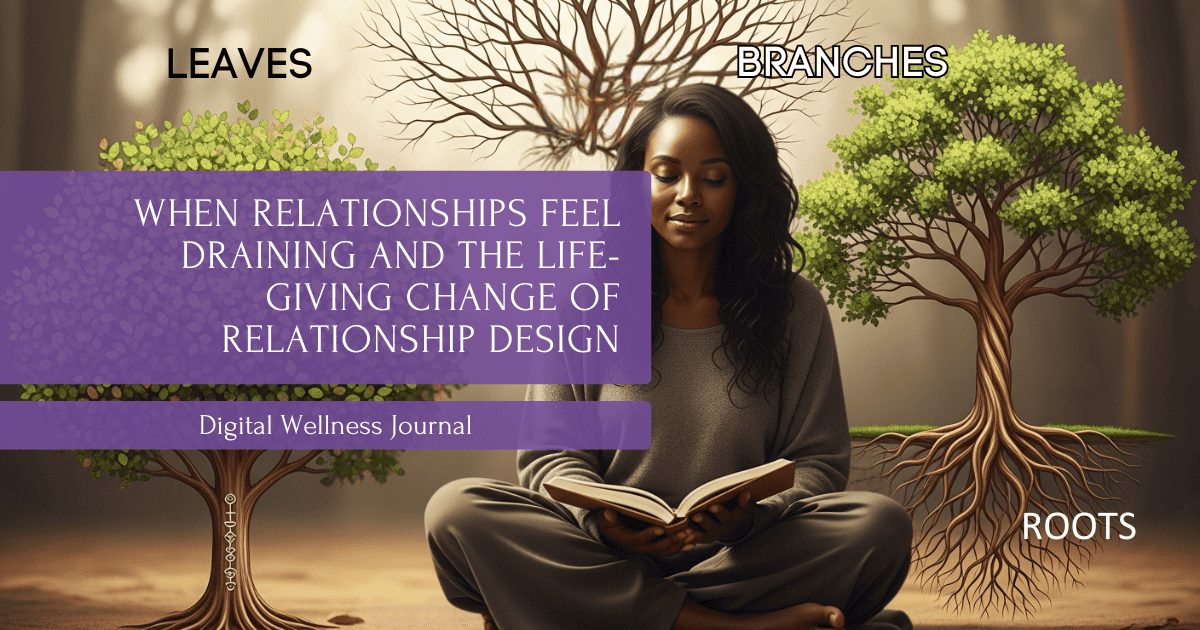
The Madea Tree Analogy: Leaves, Branches, and Roots
In this analogy, people are compared to parts of a tree, creating a natural hierarchy of connections:
- Leaves: These are the people who blow in and out with the wind. They move with whatever is happening around them. They are not stable, and they are not meant to carry weight. They are there for a moment, a season, or a specific chapter.
- Branches: These people can support you for a while. They are stronger than leaves. They walk with you, hold some of your weight, and might even be there in key seasons. But if you lean on them too hard, or expect them to hold everything, they break.
- Roots: These are your deep, life-giving relationships. Roots hold you down, nourish you, and help you grow. They are supportive, grounding, respectful, and reciprocal. They do not need attention all the time, but they are there, steady, when storms come.
In real life, your roots are the life-giving relationships that feed your energy. There may not be many, but they are solid. They hold space for you to grow, they tell you the truth with care, and they want to see you whole, not just useful.
Your leaves and branches are still important. They are part of your story. They just are not meant to do the work of roots. This tree analogy contrasts with the rigid expectations people often place on relationships and instead encourages a more flexible view of how different people show up in your life.
Transitional and Draining Connections
Some relationships are what you might call transitional. These are your leaves and branches. They appear for a season or a purpose. A coworker who walked with you through a hard project. A friend who fits a certain stage of your life. A community that held you when you needed it.
They are not bad. They are just not meant to be permanent. Instead of forcing your connections into a hierarchy, this perspective honors each relationship for what it truly is and lets it develop in a way that feels natural for everyone involved.
The trouble starts when you try to turn seasonal people into forever roles, much like pursuing an escalator relationship where connections are expected to progress linearly. When you force a branch to be a root through experimentation with different roles. When you keep chasing a leaf that has already blown away, mistaking it for your ideal match.
Then there are the truly draining relationships. The ones you keep watering long after the fruit stopped growing. Where you’re carrying the emotional load. Where the communication feels heavy. Where your energy dips every time, yet you stay from habit, fear, or loyalty.
You can love someone deeply and still accept that their season in your life has shifted. That truth is painful and freeing at the same time.
How Relationships Impact Your Energy
You do not need a long list of red flags to know something is off. Your energy already knows. Your body already knows.
Signs from Life-Giving vs. Draining Ties
Different kinds of relationships affect you in very different ways. You can often feel it in your mood, your thoughts, and your body.
Here is a simple way to see the contrast:
| Type of Relationship | How It Usually Feels |
| Life-giving/root-level | More clarity, more calm, more motivation More creativity, more emotional stability |
| Draining/misaligned | Exhaustion, confusion, and constant overthinking Growing resentment and a sense of emotional heaviness |
Life-giving relationships do not mean there is never conflict. It means even in conflict, there is respect, safety, and recovery. You might feel challenged, but you do not feel erased.
Draining relationships are the ones that make you doubt yourself, often involving high-effort communication that lacks clarity. You leave conversations feeling smaller, tense, or like you have to work twice as hard just to be okay.
Listening to Your Body’s Signals
Your body is usually ahead of your mind. It responds to energy long before you have words for what is happening.
Your body often reacts before your mind understands.

If someone walks into the room and your shoulders drop, your breathing slows, and your spirit settles, that is information. Your body is saying, “This feels safe. I can rest here.”
If you see a name on your phone and your chest tightens, your stomach flips, or your strength feels like it drains out of you, that is information too. Your body is asking, “Why do I feel like I have to armor up for this?”
Our relationships mirror our patterns and our needs. They also show us where we have been neglecting ourselves. When you start to listen to your body’s signals, you get honest data about what is supporting you and what is not.
Boundaries as Energy Protectors
For a lot of us, the word “boundaries” used to sound harsh or cold. It felt like rejection or punishment. So we avoided setting them, then wondered why we felt so tired all the time.
Why Boundaries Feel Uncomfortable but Essential
It helps to reframe what boundaries actually are.
Boundaries aren’t punishments. They aren’t walls. They are energy protectors.
Boundaries are not about controlling other people. They are about deciding what aligns with your needs and desires, what you can hold, and what you cannot. They create relationships that feel balanced, respectful, and aligned with your autonomy, who you are becoming.
At first, boundaries can feel awkward. Setting them often involves explicit conversations. You might feel guilty or vulnerable. You might worry that people will leave. But over time, you realize that healthy boundaries do not harm relationships. They clarify them and bring freedom.
The people who are right for your inner world might need some time to adjust, but they will learn how to love you with those boundaries in place.
The Four Key Types of Boundaries
There are many ways to set boundaries, but four types show up most often in daily life:
- Time boundaries
Example: “I can talk, but not right now.”
This protects your schedule and capacity. It reminds you that you are allowed to honor your own time instead of always being on call. - Emotional boundaries
Example: “I’m here for you, but I can’t carry this alone.”
This is for the moments when you are being pulled into someone else’s emotional storm. You can care deeply without becoming their only lifeboat. - Communication boundaries
Example: “I’m open to this conversation, but not in this tone.”
This sets a standard for how you will be spoken to. It makes space for conflict, but not disrespect. - Access boundaries
Example: “Everyone doesn’t get the same level of me.”
This is about who gets close to your heart and your daily life. Not everyone gets full access, and that is healthy.
When you treat boundaries as energy protectors, you stop seeing them as selfish. You start seeing them as part of your wellness work.
The Four Phases of Relationship Design
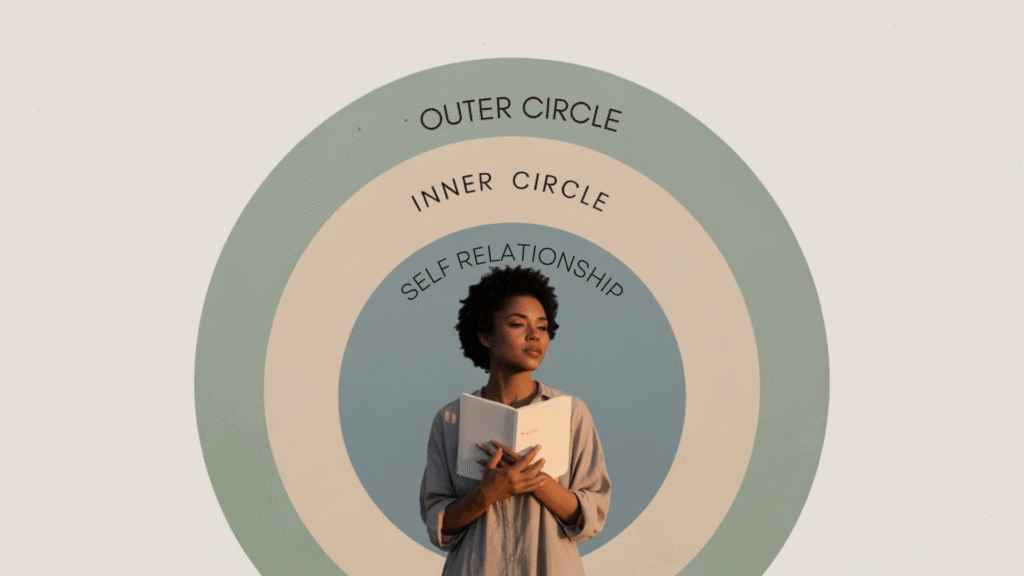
Inside the DWJ Life by Design approach, conscious relationship design can be broken into four phases based on key design principles. These phases help you understand who belongs where in your life, so you are not forcing every relationship into the same category.
Instead, you move beyond the idea that only your closest circle matters and adopt a broader relationship design that honors the different ways people can show up for you.
Phase One: Self-Relationship
This first phase is the foundation.
Phase One: Self-relationship
Key pieces include:
- Your inner voice.
- Your sense of self-worth.
- How you treat yourself when no one else is watching.
This phase sets the standard for everything else. The better you care for your own needs and truth, the more clearly you see which relationships fit your life and which ones do not.
Phase Two: Inner Circle
Your inner circle is the small group of people whose words and actions land the deepest. This relationship structure defines a hierarchy of access, with clear boundaries that support emotional intimacy.
These might be:
- Partners or spouses.
- Best friends.
- Immediate family.
- Your children or those you care for closely.
Sexual relationships often fall here, where you co-create a relationship built on shared values. In these connections, you are looking for a few non-negotiables:
- Reciprocity.
- Emotional safety.
- Consistency.
- Respect.
Avoid the relationship escalator trap where connections are expected to progress in a fixed way. Instead, use tools like empathy maps to understand different perspectives and define relationship terms that truly fit your needs. The people in this circle shape your emotional world, so choosing who belongs here with intention matters.
Phase Three: Outer Circle
Your outer circle is still important, but it carries lighter expectations. These are people you care about, but they do not need full access to your heart. The phases help you shape the right expectations for each connection so you can honor the relationship without overextending yourself.
This may include coworkers, acquaintances, or extended family. You can be kind, supportive, and available in a grounded way without opening all your deepest layers.
These relationships don’t need full emotional access. When you remember that, you stop over-giving in places that were never meant to be your core support system.
Phase Four: Digital and Environmental Influences
The last phase is one we often overlook: the spaces around you. Through experimentation and continuous design, you refine these elements to meet your relationship goals.
This includes:
- Your online world.
- Group chats and text threads.
- Social media feeds.
- Workplace culture.
- The emotional temperature of your home.
These spaces hold energy, too. A group chat that is always in crisis, a feed that leaves you feeling behind, a home that never feels calm, all of that is part of your relationship design.
When you start sorting relationships and spaces into these phases, you stop forcing everything into all or nothing. You can let connections be what they are without pushing them to become something else, giving each one room to grow in its own way.
If you want to go deeper into these Life by Design phases and how to apply them, you can add your name to the Life by Design waitlist and get updates when more tools and guidance are available.
Aligned Relationships Support Your Wellness
Sometimes the most powerful thing you can do is sit quietly for a personal check-in with a few honest questions. You do not have to answer them all at once. You can take them into your journal, your walk, or a quiet moment at the end of the day.
Each question is a doorway into more clarity:
- Who drains me and why? These questions help us see our relational world with honesty and compassion.
- Who supports me in ways I’ve overlooked? These questions help us see our relational world with honesty and compassion.
- Where am I overgiving? These questions help us see our relational world with honesty and compassion.
- What boundary have I been avoiding? These questions help us see our relational world with honesty and compassion.
- Which relationship is shifting in season? These questions help us see our relational world with honesty and compassion.
- How do I treat myself when I feel unseen? These questions help us see our relational world with honesty and compassion.
You don’t have to rush to fix anything. Just noticing is a big step. From that awareness, your next right move becomes clearer, and it can open the door to more honest conversations with the people you’re in connection with, which strengthens the bond.
If you want ongoing support with this kind of work, you can explore more reflections and guides on the Digital Wellness Journal Blog, or connect with other women doing this work inside the Daily Wellness, Everyday Living community group.
Keep giving yourself permission to grow, even if not everyone grows with you. Make time for a regular check-in to assess your progress and co-creating a relationship that fosters greater autonomy and a sense of freedom.
Your daily wellness isn’t something extra. It is the foundation that every other relationship in your life rests on.
Key Takeaways
- Relationship heaviness usually starts with self neglect and unclear boundaries.
- Every connection fits into a season: leaf, branch, or root.
- Your body gives early signals about what feels safe or draining.
- Relationship Design brings clarity to who belongs in your inner circle.
- Aligned relationships support your emotional and energetic wellness.
FAQs

Hey Everyone! I’m Tamberly
I’m a Certified AI Life Coach and creator of DWJ Life by Design. I helps women redesign their lives with clarity using journaling, digital wellness tools, and simple system based habits. My work supports women who want balance, intention, and emotional peace in their everyday lives.
Discover more from Digital Wellness Journal
Subscribe to get the latest posts sent to your email.