You deserve a sanctuary where you can finally put down the armor. For Black women, creating a calming home isn’t about following design trends, it’s about survival. Generational stress, the pressure to perform twice as hard, the exhaustion of carrying both joy and grief in the same breath… all of it comes home with you.
That’s why your living space matters. A restorative home becomes more than décor, it becomes a daily act of healing, a buffer against the weight you carry.

Why Your Environment Shapes Your Energy
Your home sets the tone for how you show up in the world. A cluttered or chaotic space can leave you restless, while a mindful, healing space whispers to your nervous system, you’re safe here.
The science backs it up. A UCLA study found women with cluttered homes had consistently elevated cortisol levels, the stress hormone. On the flip side, intentional design, especially natural light, organized spaces, and plants, has been shown to improve sleep and boost mood.
Before you start, take a quick check-in: when you walk through your door, on a scale of one to ten, how calm do you feel? That number is your baseline.
Step One: Clear the Chaos
You don’t have to empty closets overnight. Even clearing one nightstand or wiping down your desk can shift the energy. That tiny pocket of order reminds your body what peace feels like, and motivates you to keep going.
Evidence shows decluttering isn’t just cosmetic. A 2016 study in Current Psychology linked a messy home with higher procrastination and lower life satisfaction. Clearing your space clears mental fog too.

YOUR 6 DAY GUIDE BACK TO PEACE & CALM
The Peace-First Digital Planner is a gentle reset for your mind, space, and spirit. Over 6 days, you’ll:
- Pause: Start each morning with a quick check-in.
- Process: Try simple 5-minute practices that clear the clutter and restore energy.
- Protect Your Peace: Reflect each evening with affirmations and journaling.
By the end, you’ll carry forward small rituals that make calm part of your everyday life.
Step Two: Invite Nature In
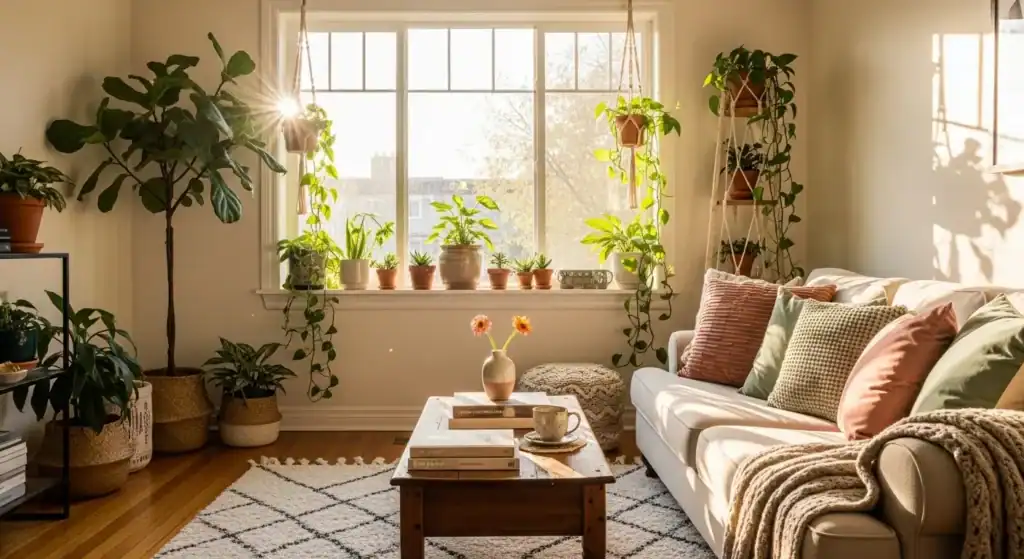
Plants, sunlight, and natural textures help you feel grounded. A leafy fern in the corner or a woven basket by the couch connects you to the earth, reminding you of your rootedness.
If you’ve never kept plants alive, start simple. A snake plant or pothos will thrive even if you forget about it for weeks, yet still pour quiet life into the room. It’s less about becoming a gardener and more about letting nature share its calm with you.
Step Three: Engage All Your Senses
A restorative home works on every level: sight, scent, sound, and touch.
- Light lavender or eucalyptus oils in a diffuser, or burn a candle during your evening wind-down. Many women make this part of their journaling ritual, so the fragrance signals it’s time to soften.
- Playlists with rain sounds or soulful jazz can settle your heart rate within minutes.
- Cozy blankets, textured pillows, or a grounding rug anchor you in the moment.
Research from the National Sleep Foundation highlights that sensory cues like soothing scents and weighted textures help the body transition into rest more smoothly. Pairing one sense with one ritual, like lavender with journaling, teaches your body that peace is on the schedule.

Step Four: Infuse Culture & Identity
Your home should reflect you. Hang affirmations that remind you of your worth, display art from Black creators, or bring in colors that echo your heritage. This personalization isn’t just decoration, it’s reclamation.
Sometimes it starts small. A single line of poetry taped to your mirror, say, Toni Morrison’s “You are your best thing,” can be enough to shift how you move through the day. Over time, those reminders accumulate into a home that reflects you back to yourself.
Step Five: Use Boundaries as Design
Sometimes peace means shutting the door. Create zones in your home: a work zone, a rest zone, a creativity zone. This boundary-setting keeps your brain from blurring the lines between stress and serenity.
Even in a studio apartment, one chair can be your no-work zone. Over time, sitting there becomes a signal: this is where I rest, where I create, where I breathe.
One small study found people who associated their bedrooms strictly with rest slept better than those who worked from bed. You don’t need more square footage—just intentional use of what you already have.
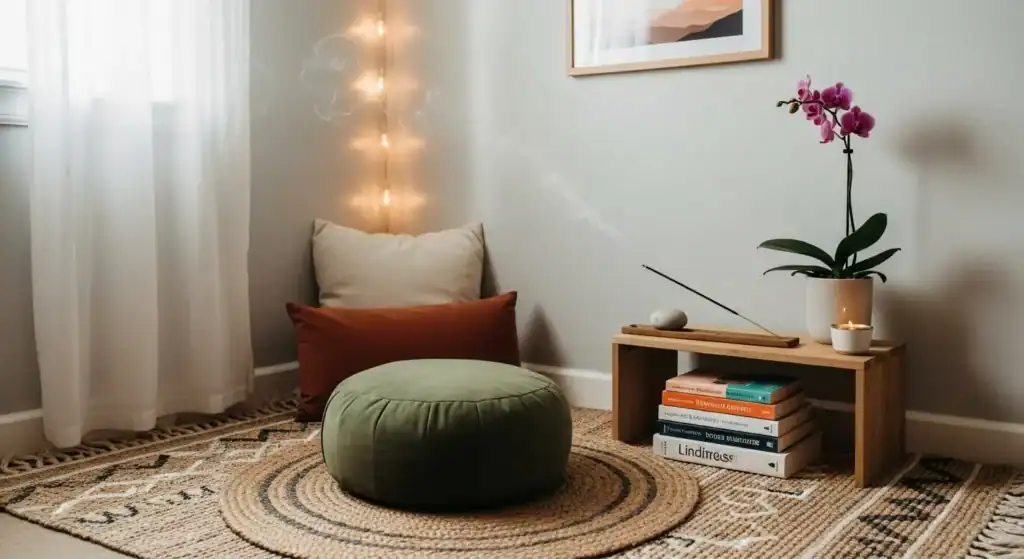
[Image Placeholder: A small corner transformed into a meditation space. Alt text: “Calming home with peace zones”]
Everyday Tools That Support Your Space
Some practices are easier with the right tools. A diffuser on a timer, smart bulbs that dim automatically, or even a white-noise app can reinforce your peace practices. The point isn’t the gadget itself, it’s how it fits into your ritual. Imagine: lavender mist in the air, lights softening, your journal open. That’s a healing space working with you.
Bringing It All Together
Designing a calming home isn’t about perfection. It’s about consistency. Clear the chaos, invite nature, engage your senses, honor your culture, and set boundaries through design. Protecting your peace is a daily practice, and your home can be your biggest ally.
Before you move on, here are two external resources worth checking out:
Your Turn
What three changes could you make this week to turn your home into a restorative space that actively protects your peace?
Pin This for Later Inspiration
Your calming home starts with intention. Save these pins as gentle reminders to return to whenever you need to reset your space—and yourself.
Discover more from Digital Wellness Journal
Subscribe to get the latest posts sent to your email.