

You know everyone’s doctor. You remember allergies, medications, checkups, forms, follow-ups, and the questions that need to be asked.
Meanwhile, your own appointment keeps getting pushed back.
That’s health mental load.
And it’s heavier than it looks.
It’s not just the care you give. It’s the constant remembering, tracking, researching, and worrying that keeps your mind on duty long after the appointment ends.
When that load sits on your shoulders too long, your body pays for it.
Table of Contents
What Health Mental Load Actually Looks Like
Health mental load is the invisible work of managing health for yourself and the people you care for, often referred to as part of the “invisible labor” many women carry daily (learn more about invisible labor)
Yes, it includes booking appointments.
But it also includes the mental tabs no one sees.
That hidden work looks like:
- Tracking symptoms before anyone else notices
- Researching conditions late at night
- Managing medications and refill dates
- Coordinating appointments and insurance details
- Advocating at doctor’s visits
- Carrying the emotional weight of worry
A “30-minute appointment” rarely takes 30 minutes.
It starts days before.
And it continues long after.
That’s why this feels so exhausting.
It’s not one task. It’s a system running in your head.
And the person managing everyone else’s health is often the last one to care for her own.

Why Women Carry So Much of It
In many homes, one person becomes the default health manager.
It happens slowly.
One appointment becomes two.
One prescription becomes a full list.
Before long, you’re the one who knows everything.
Not because you were assigned.
But because you noticed, remembered, and cared.
Now you’re the family’s chief medical officer
without the title, support, or relief.
There’s also conditioning underneath this.
Being “good” often meant being:
- dependable
- self-sacrificing
- always available
So you cancel your appointment.
Ignore your symptoms.
Push through exhaustion.
And a quiet belief forms:
Your health can wait.
It can’t.
You’re not just managing logistics.
You’re holding fear, responsibility, and uncertainty all at once.
If this feels familiar, you’re not failing.
You’re carrying an invisible load.
If this sounds familiar, you’re not failing. You’re carrying an invisible load, and managing mental load overwhelm starts with naming what you’ve been holding.
The EOD shift (Externalize, Organize, Design)
You don’t need more effort.
You need less stored in your head.
Step 1: Externalize
Set a timer for 10 minutes.
Write down everything:
- appointments
- medications
- symptoms
- overdue care
- health tasks (yours and others)
Don’t organize it. Just release it.
Journal Prompt:
What health task am I doing for others that I’m not doing for myself?self?
Step 2: Organize (Use AI Support)
Paste your list into ChatGPT and use:
“I’m experiencing health mental load. Organize this list.
Categorize it, flag urgent items, identify what can be delegated, and suggest one system.”
This removes the thinking burden.

Step 3: Design a System
The goal is not to manage better.
The goal is to stop carrying everything internally.
Pair this with a nighttime reset practice if your mind stays active at night.
3 simple systems to start this week
You don’t need a life overhaul.
You need one visible shift.
1. Create a Family Health Hub
Use a Google Doc or notes app.
Include:
- doctors
- medications
- allergies
- appointments
Script:
“I’m creating a shared health document. Everyone adds and maintains their info.”
2. Use a Health-First Rule
Book your appointment first this week.
Not after. Not if there’s time.
First.
3. Delegate Ownership (Not Help)
Say:
“I’ve been managing our health logistics. I need to share that responsibility.
I’d like you to take ownership of [specific task].”
Not “help.”
Ownership.

What changes when you stop putting yourself first
This doesn’t break all at once.
It builds slowly:
- fatigue
- delayed care
- small issues becoming bigger
The shift is simple, but not easy:
Your health goes on the calendar first.
Not less care for others.
Equal care for you.
If you need more support building rhythms that actually restore you, build rhythms against burnout alongside this work.
Start tonight with one small action
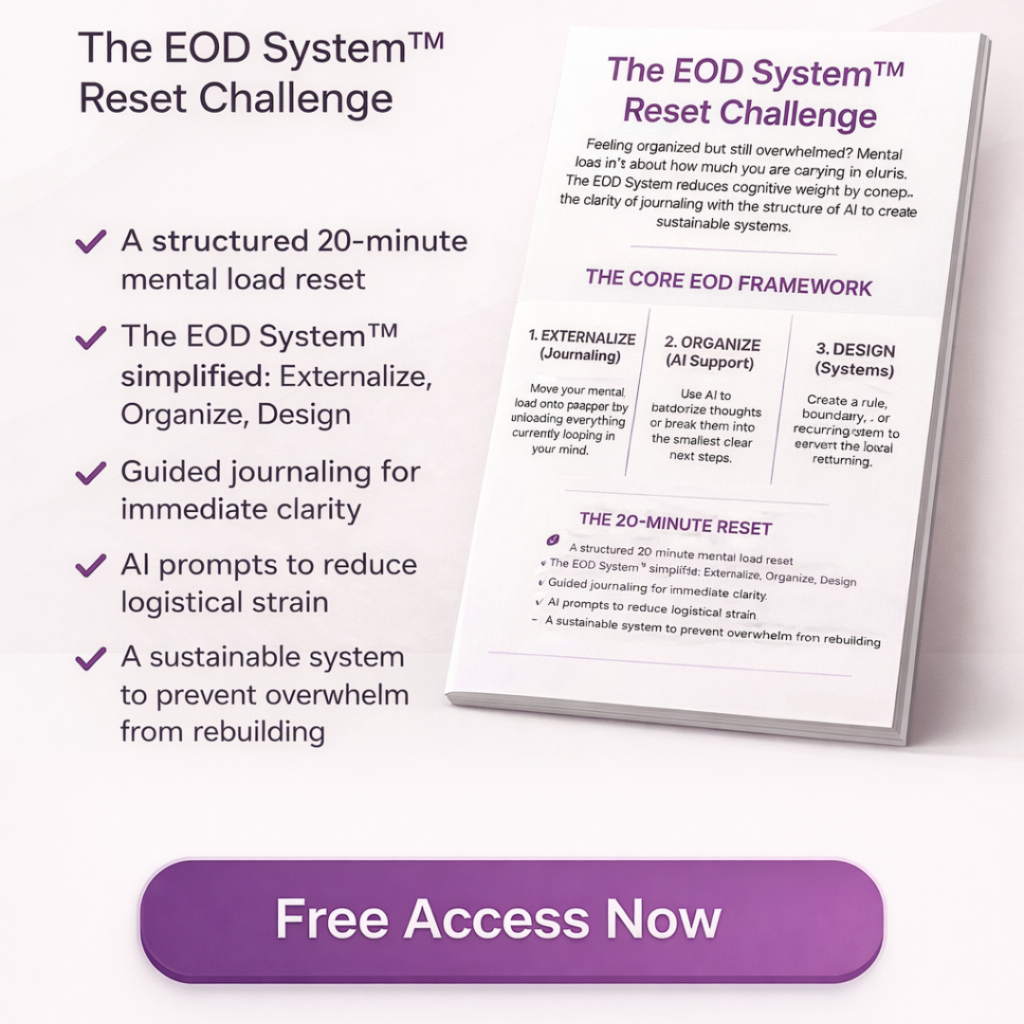
If you want a place to begin, try the free 20-Minute EOD Reset Challenge from Digital Wellness Journal. It walks you through the same three steps, externalize, organize, and design, so you can stop guessing and start seeing what needs to change.
Then take one small visible action before the day ends: book one appointment for yourself.
If you want ongoing support for living this way, The Prompted Life community is a gentle next step. It’s a space for building small systems, using reflection well, and creating a life that doesn’t depend on you holding everything in your head.
Your takeaway is simple: your body belongs on your own list. You do not need to earn care by burning out first. Start with one page, one prompt, one appointment, and let that be enough for today.


Share Your Thoughts